
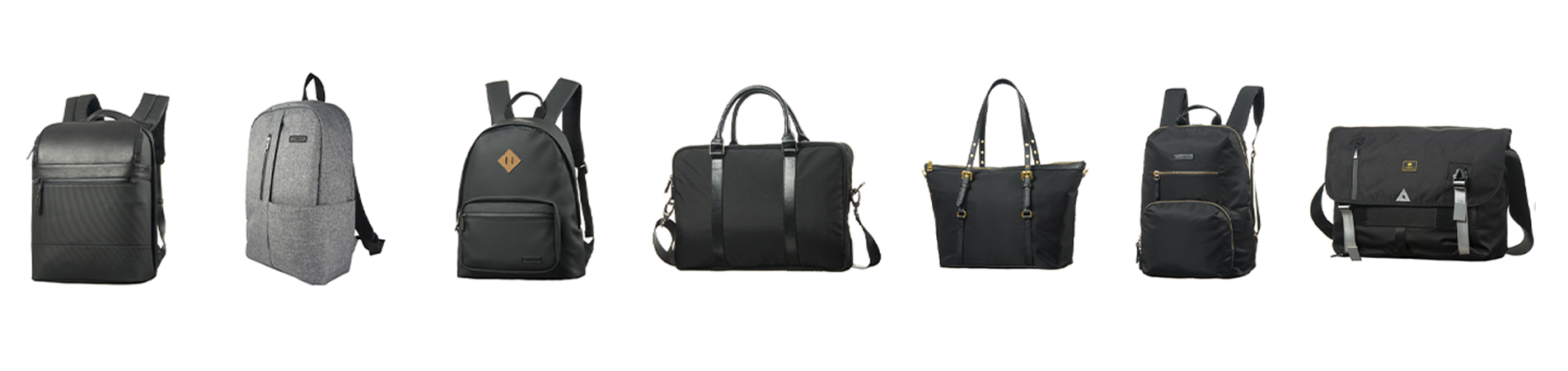
During the OEM production of transparent bags, PVC, EVA, and TPU are the three most frequently mentioned materials. Among them, PVC has the widest range of applications, TPU offers the most balanced overall performance, while EVA is irreplaceable in specific applications due to its soft feel. Taking common transparent bag applications as examples:
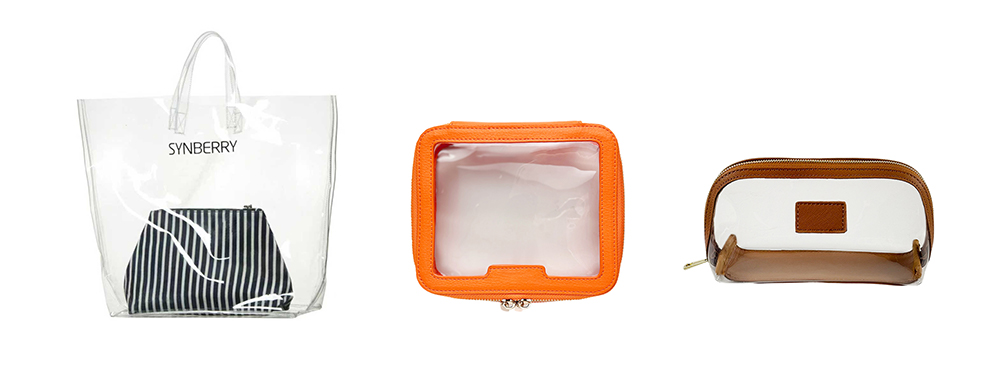
Table of Contents
I. Differences in Composition
II. Differences in Performance
2.1 Transparency and Appearance: PVC > TPU > EVA
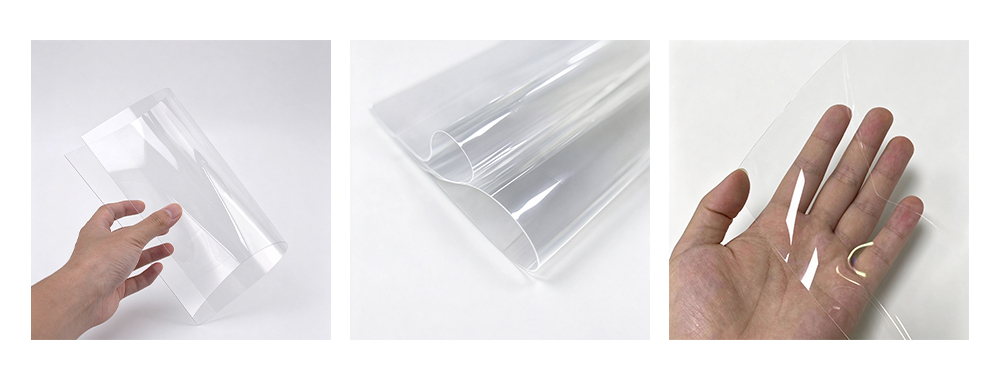
2.2 Softness and Hand Feel: EVA > TPU > PVC
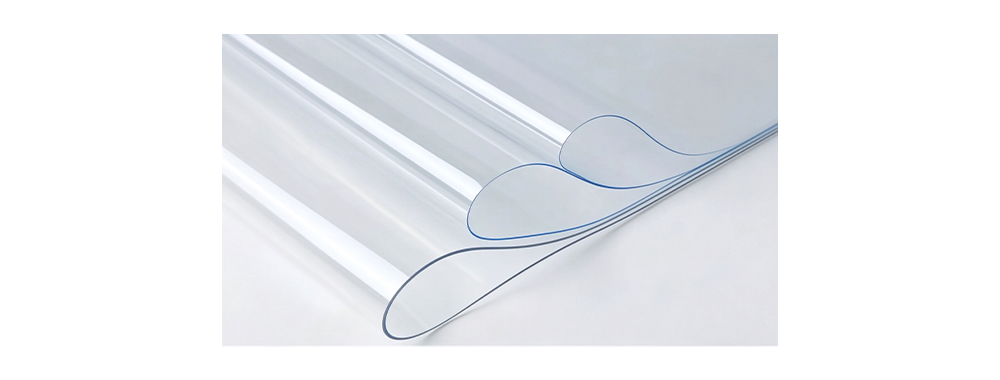
2.3 Temperature Resistance: TPU > EVA > PVC
2.4 Abrasion Resistance / Surface Scratch Resistance: TPU > PVC > EVA
2.5 Visual Lifespan: Resistance to Yellowing and Whitening
During the long-term use of transparent bags, resistance to yellowing and haze formation directly determines the product's visual lifespan. The differences among the three materials in this dimension reflect real-world user experience more accurately than short-term performance data.
Yellowing and whitening have different causes. Yellowing mainly occurs when the molecular structure of a material undergoes oxidative degradation after exposure to ultraviolet light, thermal oxidation, or contact with certain substances, resulting in the formation of chromophoric groups. Whitening, on the other hand, is often caused by additives or oligomers migrating to the surface and accumulating there to form fine precipitates, causing the film surface to lose its transparency. These two phenomena are often confused, but their mechanisms of damage to the appearance of transparent bags are completely different.
However, selecting high-quality PVC made with environmentally friendly plasticizers can delay the onset of yellowing. For short-term applications such as fast-fashion packaging, this drawback may be acceptable. For mid-to-high-end products that require long-term display or repeated use, however, PVC's performance still needs to be evaluated carefully.
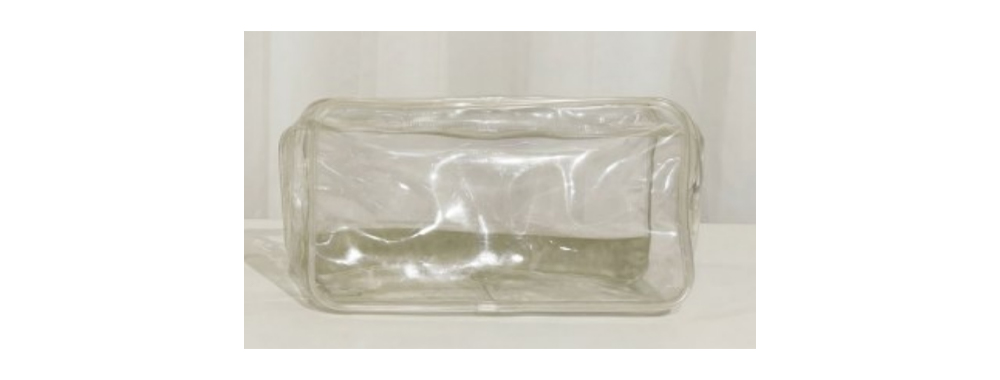

The first category is standard, general-purpose TPU film: This typically refers to aromatic polyester-based TPU. This type of TPU has the weakest resistance to yellowing and whitening among the three materials. Over time and as usage conditions change, surface deposits may migrate to the surface, causing bloom-like deposits and a whitish appearance. This irreversible whitening is caused by the migration of additives and oligomers. It is particularly likely to become noticeable under conditions of high temperature, high humidity, or prolonged compression. This is a characteristic of conventional TPU rather than a quality defect. Therefore, transparent bags made from aromatic TPU are more suitable for indoor use or applications where color changes are not a major concern.
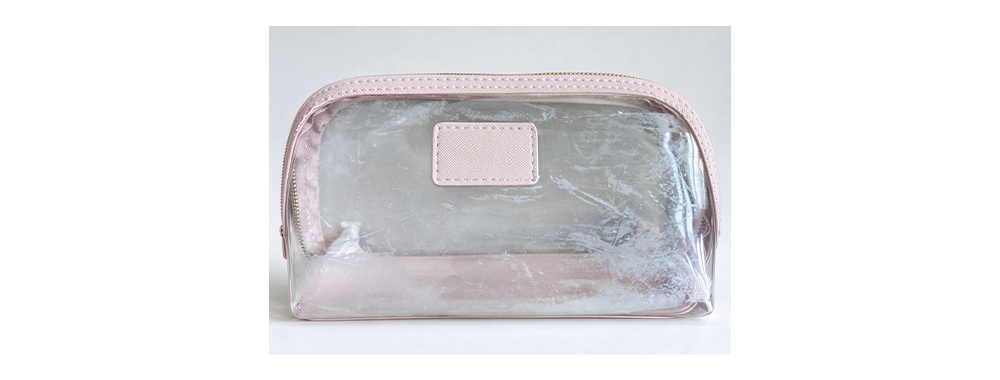
The second category is high-quality modified TPU: This refers to aliphatic polyether-based TPU, which offers greater stability in terms of transparency and resistance to surface blooming, effectively delaying the onset of surface deposits. It can maintain a high level of light transmittance even after long-term outdoor use, making it a key material choice for high-end transparent bag products.
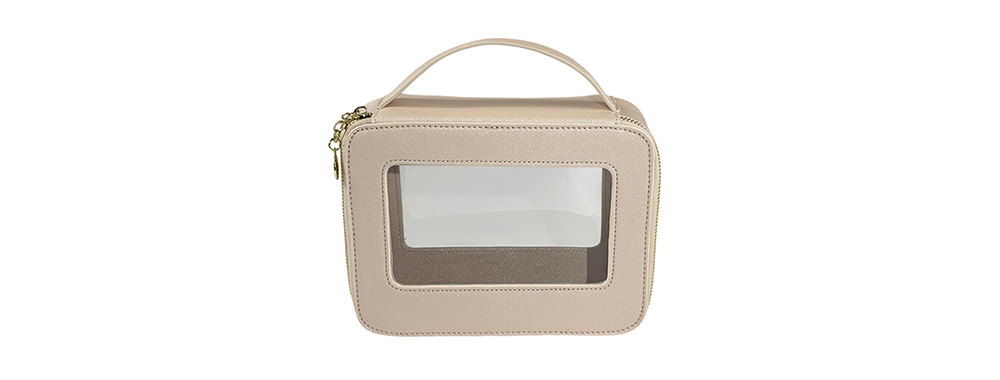
In terms of ranking, resistance to yellowing is as follows: Aliphatic TPU > Aromatic TPU > EVA > PVC. Resistance to whitening is approximately: Aliphatic TPU ≥ EVA > PVC > Aromatic TPU. When selecting materials, if a brand has specific requirements for the long-term transparency of its transparent bags, aliphatic TPU should be the first choice. If overall performance is the main consideration and appearance lifespan is not a major concern, aromatic TPU can be selected.
2.6 Welding and Processability: PVC > TPU > EVA
All three materials can be joined using high-frequency heat sealing or ultrasonic welding, but their performance differs significantly.
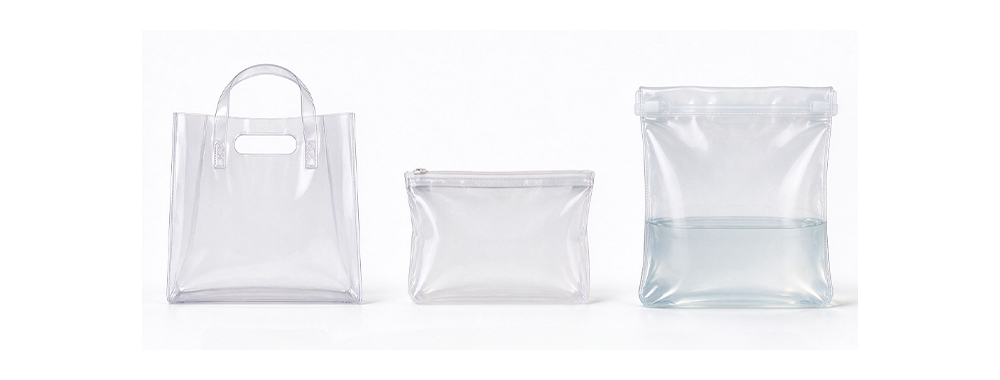
III. Environmental Friendliness, Compliance, and Safety
From the perspective of environmental friendliness, regulatory compliance, and safety, the differences among the three materials deserve even greater attention than their performance differences. These factors directly determine whether a product can enter its target market and whether it can be used for specific groups of people and in specific applications. They are also the key factors that truly distinguish the three materials.
3.1 PVC: The Biggest Concern Is Plasticizers
The main concern with PVC lies in its plasticizers. Commonly used phthalate-based plasticizers in PVC, such as DEHP and DOP, may gradually migrate out of the material during prolonged contact with skin or oils, or when exposed to high-temperature environments.
As a professional bag manufacturer, SYNBERRY selects materials that meet the environmental requirements of the target market based on the customer's market region and product application, ensuring that products meet the applicable regulatory requirements before export.
3.2 EVA: Plasticizer-Free and Chlorine-Free
EVA does not contain plasticizers and has no chlorine in its composition, making it significantly better than PVC in terms of environmental friendliness and safety assessments. EVA has a long history of use in food-contact materials and children's toys. For general-purpose transparent bags, using EVA can substantially reduce regulatory compliance burdens. However, when in contact with oily contents, EVA offers lower resistance to oil and grease migration and lower long-term stability than TPU. Therefore, careful evaluation is still necessary for applications involving high-oil-content cosmetics or products that require repeated cleaning and disinfection.
3.3 TPU: The Most Advantageous in Terms of Regulatory Compliance
TPU offers the greatest advantages in terms of regulatory compliance. It has good biocompatibility, can achieve softness and elasticity without the need for plasticizers, and certain types of TPU can be recycled. For high-end cosmetic bags, medical device packaging, and transparent bags exported to regions with strict environmental standards, TPU is a reliable choice for applications with the highest safety requirements.
IV. How Should Brands Choose? Start with the Application Scenario, Then Determine the Material Solution
When translating the differences in composition, performance, and regulatory compliance discussed above into practical material selection, the choice of material for transparent bags should satisfy three key dimensions: whether safety and regulatory requirements are met in the target market, whether performance can withstand the actual intensity of use, and whether the cost matches the product positioning.
4.1 Compliance Considerations in the OEM Process for Cosmetic Bags
From a safety and regulatory compliance perspective, whenever the target market is a region such as the European Union or California in the United States, where there are explicit restrictions on phthalate plasticizers, PVC should be carefully evaluated as a material or downgraded to an alternative option. This is because the risk of plasticizer migration is the most prominent among the three materials. Both EVA and TPU can meet requirements in this regard. However, if the contents have a high oil content or the product requires repeated cleaning and disinfection, EVA has relatively weak resistance to oil and grease migration, making TPU the more reliable choice.
4.2 Performance Requirements Based on Application Scenarios
From the perspective of usage intensity, transparent bags intended for fast fashion or short-term use do not have high requirements for elastic recovery, abrasion resistance, or temperature resistance. PVC can meet these needs at a relatively low cost. However, for products that need to be opened and closed repeatedly, bent frequently, carried over long periods, or potentially used in low-temperature environments, PVC's weaknesses in brittleness and abrasion resistance will quickly become apparent. TPU's advantages in elastic recovery and flex-fatigue resistance translate directly into a noticeable difference in user experience.
The following table compares the suitable applications of the three materials based on actual transparent bag applications:
|
Bag Type or Requirement |
Preferred Material |
Reason for Selection |
|
Promotional giveaway cosmetic bags |
PVC |
Low cost, high transparency, and mature printing processes |
|
Mass-market retail transparent cosmetic bags |
PVC or EVA |
PVC is more cost-effective and offers greater stiffness, while EVA is lighter and has a softer hand feel |
|
Mid-to-high-end branded cosmetic bags |
TPU |
TPU is more durable, and its perceived quality can be enhanced through thickness selection, hardware, and printing |
|
Travel toiletry and storage bags |
All three materials are suitable |
Lightweight and easy to clean, making them suitable for general travel storage |
|
Storage bags for frequent business travel and long-term use |
TPU |
Abrasion-resistant and fold-resistant, suitable for frequent use |
|
Beach bags and transparent shopping bags |
PVC |
Easy to manufacture in large sizes, maintains a structured shape, and allows costs to be controlled |
|
Outdoor waterproof bags and stream-crossing bags |
TPU |
Good toughness and abrasion resistance, suitable for more demanding environments |
|
Protective bags for electronic products such as mobile phones and cameras |
TPU |
Offers better advantages in scratch resistance, fold resistance, and protective performance |
|
Children's stationery bags and lightweight, soft storage bags |
EVA |
Lightweight and soft, with a gentle hand feel, but chemical safety must still be verified according to children's product requirements |
|
Bags used in low-temperature environments |
TPU |
Generally more suitable than standard PVC and EVA for low-temperature conditions and repeated bending |
|
Bags emphasizing high transparency and a “glass-like” appearance |
PVC or high-transparency TPU |
Better suited to achieving a highly transparent appearance, depending on the film grade and thickness |

4.3 Cost Considerations
From a cost perspective, in terms of raw material unit prices, PVC is the least expensive, EVA comes next, and TPU is the most expensive. This is the most immediately noticeable difference among the three materials at the quotation stage.
The overall cost ranking of TPU also needs to be discussed in two categories:
The following table compares the costs of these three materials across multiple dimensions, assuming the same dimensions and thickness.
|
Comparison Item |
PVC Transparent Film |
EVA Transparent Film |
TPU Transparent Film |
|
Procurement Cost |
Lowest; mature supply chain and relatively stable prices |
Medium; generally more expensive than PVC |
Highest; significantly more expensive than PVC and EVA |
|
Material Density |
Relatively high; greater material weight for the same area and thickness |
Relatively low; lighter weight per unit area |
Generally between EVA and PVC |
|
Cost of Achieving the Same Softness |
Low; softness can be adjusted relatively easily through the plasticizer system |
Medium; softness depends on VA content |
High; significant price differences exist between hardness levels and grades |
|
Cost of Achieving Transparency |
Standard high transparency is easy to achieve at low cost |
Costs increase when high transparency is required |
Higher costs for high transparency and low haze |
|
Printing and Lamination Costs |
Mature processes, with a wide range of options such as screen printing and UV printing |
Surface adhesion and ink compatibility are inferior to PVC |
Printing, lamination, and surface treatment generally require higher standards |
|
Production Waste |
Low; factories have extensive processing experience |
Medium; wrinkles caused by heat, sticking, and dimensional stability need to be controlled |
Medium to high; stricter requirements for temperature, tension, and surface protection |
|
Overall Finished-Product Cost |
Low |
Medium |
High |
|
Suitable Cost Positioning |
Mass-market promotional products and price-sensitive orders |
Mid-range products emphasizing lightweight construction, softness, and environmental friendliness |
Mid-to-high-end products emphasizing durability, low-temperature resistance, and high quality |
V. Frequently Asked Questions About Transparent Cosmetic Bag OEM
Q1: What Should You Do When a Transparent Cosmetic Bag Turns Yellow? Can It Be Restored?
This is one of the most frequently asked questions in transparent bag OEM consultations. The conclusion is straightforward: once yellowing or haze develops, there is generally no way to restore the original appearance through washing, wiping, or simple treatments.
As discussed earlier, yellowing essentially results from oxidative degradation of the material's molecular structure, which produces new chromophoric groups. Haze, on the other hand, occurs when plasticizers or oligomers migrate to the surface and form a layer of deposits. These are not surface contaminants; they are changes within the material itself. Wiping with alcohol may temporarily remove the surface oil film, but the deposits will accumulate again after a few days. Applying hot air or ironing the material will not restore its transparency and may instead accelerate plasticizer migration and material aging.
Q2: Can PVC Transparent Bags Be Exported to the EU?
Yes, but there are specific conditions. PVC itself is not completely banned in the EU. The main concerns involve plasticizers and heavy-metal stabilizers. As long as the selected PVC film passes REACH testing and any additional tests specified by the customer, PVC transparent bags can still enter the EU market.
Q3: Why Do Different Factories Quote Such Different Prices for the Same TPU Transparent Bag?
The differences mainly come from four areas.
Q4: If a Transparent Bag Has an Unpleasant Odor, Does That Mean There Is a Problem with the Material?
Unpleasant odors from transparent bags generally come from two sources.
If a customer reports an odor problem after receiving a bulk order, the first step is to confirm the material type. EVA and aliphatic TPU generally have much lower inherent odors than PVC, making them more suitable for odor-sensitive applications, such as maternal and infant products or cosmetic products that remain close to the face for extended periods.
The second step is to inspect the packaging method. Sealed plastic bags trap odors inside. It is advisable to add a ventilation step before shipment or switch to more breathable packaging materials.
Q5: Can Transparent Bags Be Printed? Will the Printing Fade or Peel Off?
Yes, transparent bags can be printed, but different materials have significantly different processing requirements.
Therefore, if a product has high requirements for print color and pattern complexity, PVC or surface-treated EVA is generally a more reliable choice. For TPU transparent bags, it is advisable to confirm the printing solution with the factory during the design stage rather than discovering inadequate adhesion during sampling.
Q6: Do Transparent Bags Become Hard in Winter?
This depends on the material. PVC becomes noticeably harder at low temperatures, especially in thin sections and at the corners. Changes in hand feel become obvious below 10°C, and cracking during bending may even occur below 0°C.
EVA performs somewhat better than PVC at low temperatures, but it can still become harder below -10°C.
For outdoor use in winter or cold-chain transportation, TPU is a more reliable choice. Standard TPU can generally maintain its flexibility at temperatures around -30°C.
Q7: TPU Cosmetic Bags Develop Blooming or Whitening After a Period of Use. Can This Be Prevented?
The onset of whitening can be delayed, but it is difficult to prevent it completely. The key factors are the TPU grade and formulation system.
Blooming and whitening essentially occur when low-molecular-weight substances, such as components of the TPU soft segments and additives, migrate to the surface and gradually precipitate after temperature changes, repeated bending, or prolonged storage. Unlike plasticizer migration in PVC, this phenomenon does not affect the material's chemical safety or mechanical strength. However, it creates a white, hazy, or powdery layer on the film surface, directly compromising the appearance of the transparent bag.
There are three main ways to reduce the likelihood of this problem.
Q8: How Can You Select a Suitable Cosmetic Bag Manufacturer?
When selecting a factory for products such as transparent cosmetic bags, price alone should not be the deciding factor. Greater priority should be given to material expertise, sampling response speed, and consistency in quality control. Many problems with transparent materials are not determined by machine precision alone, but rather by experience and attention to detail.
Overall, a transparent cosmetic bag manufacturer suitable for long-term cooperation should meet at least three conditions:
Price is certainly important. However, for transparent bags, which are sensitive to both appearance and regulatory compliance, a “low price” is meaningful only when both product quality and documentation meet the required standards.
Continúe leyendo, manténgase informado, suscríbase y lo invitamos a contarnos lo que piensa.




Derechos de autor
@2024 Synberry Bag & Package Products Co.,Ltd Reservados todos los derechos
.
 RED SOPORTADA